Royal Navy purchases DASA funded anti-drone sensor
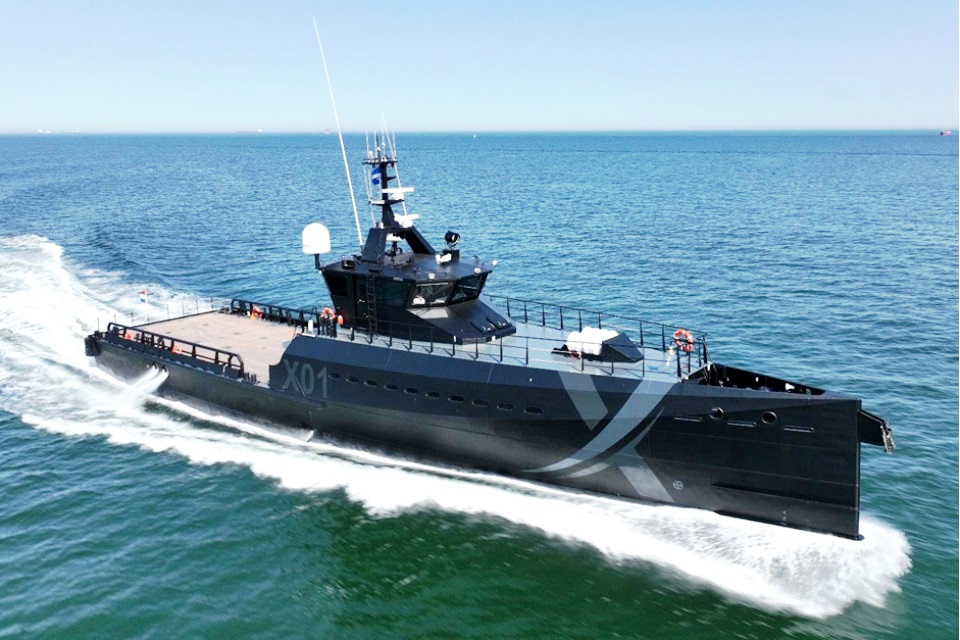
Above: LiveLink Aerospace’s CUAS technology was trialled aboard the XV Patrick Blackett.
Courtesy DASA
Cheap, accessible commercial-off-the-shelf drones present a serious challenge to defence and security. This is exacerbated by their limited radar signature, making them difficult to detect by traditional air defence systems.

As the use of unmanned air systems (UAS) continues to rise and pose greater risks to both military forces and vital national infrastructure, it has become more important than ever to develop a portable, cost-efficient solution that can be easily integrated with existing systems.
This is a challenge area that was recognised by LiveLink Aerospace - a privately owned British company based just outside Portsmouth delivering innovative technology solutions within the aviation industry - which pivoted their commercial technology to focus on supporting defence and security.
LiveLink Aerospace first engaged with DASA through the 2020 Countering Drones: Phase 2 competition. Run on behalf of the Home Office, the competition sought counter unmanned air systems (CUAS) innovations that can be integrated at fixed-site and mobile-site scenarios. LiveLink Aerospace spearheaded a consortium to develop a cost-effective, end to end CUAS solution. They secured DASA funding for their project, which prioritised passive sensors for comprehensive coverage and resilience.
Aleks Kowalski, LiveLink Aerospace’s Business Director said: "Not only did DASA have the vision to support a high risk project where the commercial market was failing, but working with DASA provided wider benefits. The project liaison staff provided by DASA were excellent. They provided constructive criticism when required, represented the ‘voice of the customer’ to challenge the development team, and much appreciated enthusiasm and encouragement throughout. Additionally, compared with other grant awarding bodies, the whole paperwork and process was streamlined and well thought through – we didn’t need to employ additional staff for their paperwork."
The consortium developed a low-cost, flexible and scalable sensor unit for tracking multiple UAS - called Passive Detection & Ranging (PDAR). The PDAR system uses conventional software defined radios, integrated circuits that can be reprogrammed and an innovative implementation of Convolutional Neural Networks (CNN) technology to detect radio frequencies (RF) emitted by drones. The senior unit itself is also silent and stealthy, as it does not emit RF emissions that could alert an adversary.
With the help of AI and a command and control station, also developed by LiveLink Aerospace, data from each individual sensor is gathered and used to detect, alert and predict UAS threats and increase situational awareness in the operational area.
Key benefits for defence and security
- Stealth: the sensor unit is entirely passive with no RF emissions to alert an adversary or conflict with other activities.
- Cooperation: when deployed alongside other sensors, the system can enable cooperative action to achieve faster threat scanning and greater range and accuracy of UAS threat detection.
- Low-cost and easy to use: quick and simple to install; with flexible calibration and connection to other systems.
- Multipurpose: the core system can (with modular upgrades) also provide wider signals analysis and intelligence, full air surveillance and alternative position, navigation and timing infrastructure.
LiveLink Aerospace further adapted their CUAS technology for a Royal Navy tender in 2022, which sought a maritime solution for CUAS. The PDAR system, originally developed for DASA, demonstrated its cost-effectiveness and efficiency. Following competitive field trials, the Royal Navy procured more than 10 CUAS systems for their frontline ships.
Not only does this show DASA funded innovations making a big impact, it also emphasises how Defence can leverage civilian innovations discovered by DASA through its security-focused competitions and services.
LiveLink Aerospace achieved another success when their technology was the first to be trialled aboard the XV Patrick Blackett during the Royal Navy tender. Commissioned in 2022, the XV Patrick Blackett serves as the Royal Navy’s test vessel for new technologies.
Ben Keene, General Manager, LiveLink Aerospace Ltd said: "We were impressed how quickly and efficiently the Navy were able to progress the project from a field trial to a sea trial with the XV Patrick Blackett. NavyX organised the sea trial in just days, and provided first rate engagement and engineering support throughout. We were slightly apprehensive when we heard we were the first technology to be tested onboard, but left very impressed by the quality and flexibility of the operation.
DASA has played a crucial role in supporting LiveLink Aerospace in advancing their technology and making it accessible to end users in both security and defence.
LiveLink Aerospace is expanding its team and recruiting more experts to enhance and meet the demand for their CUAS system. They are committed to further developing CUAS systems, and collaborating with defence and security partners and organisations, with the ultimate objective of ensuring that every valuable deployed asset is protected with CUAS technology as a standard feature in the same way as CCTV is now a default expectation.
LiveLink are also continuing to build on the foundations DASA invested in, with significant ongoing innovation in air defence technologies, and alternative position, navigation, timing and communication technologies that do not rely on expensive and vulnerable satellites.