Royal Marines get revamped raiding craft
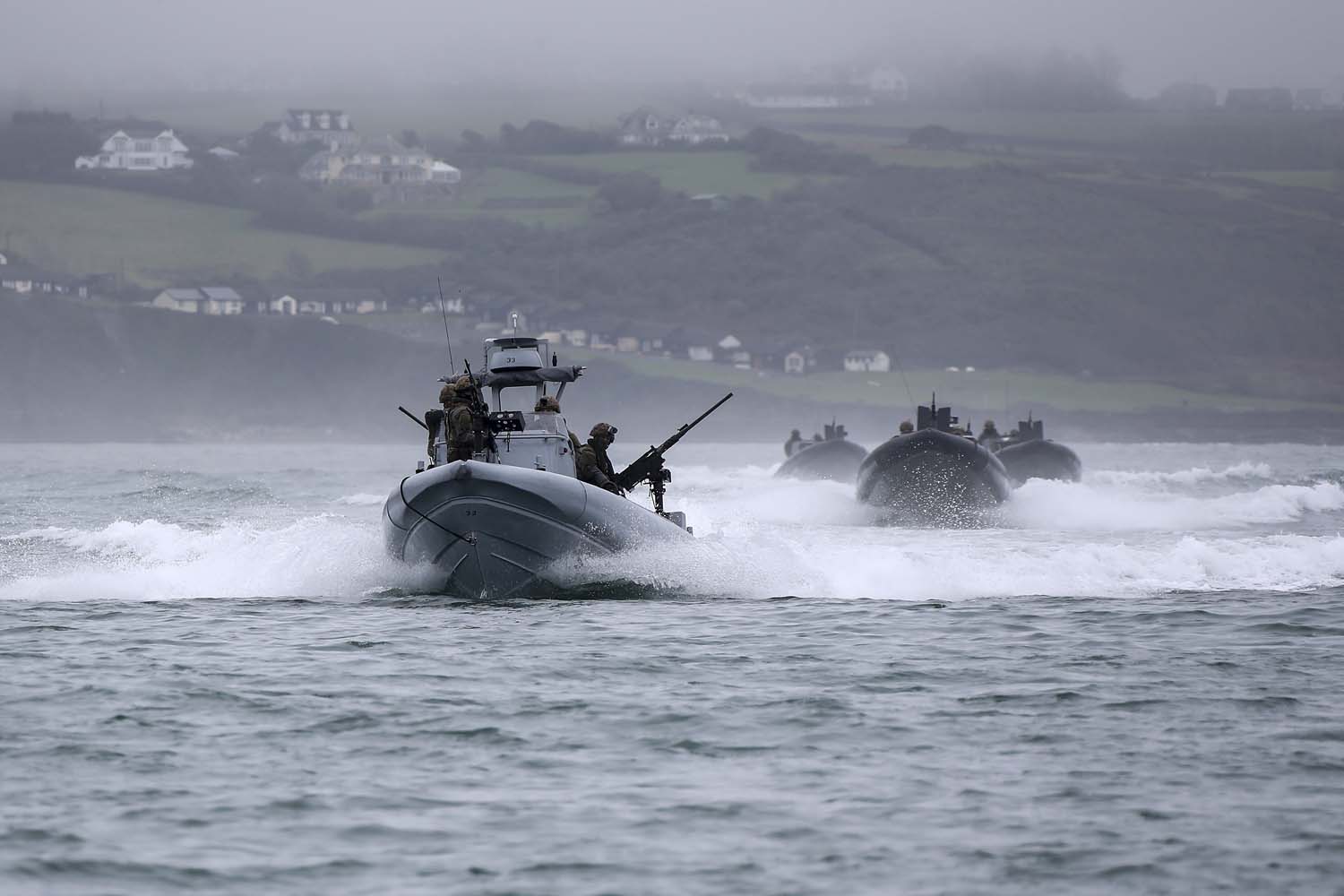
Above: The new Commando Raiding Craft (CRC) in Plymouth Sound.
Courtesy Royal Navy
Being rolled out for use on front-line operations around the world, the Commando Raiding Craft (CRC) is a redesigned version of the tried-and-tested Offshore Raiding Craft – commonly known in the Corps as the ORC.
After two decades’ service with the Royal Marines around the globe, it’s been given an overhaul to meet the demands of the commandos in the mid-21st century as they return to their WW2 raiding roots: coastal landings behind enemy lines with small teams wreaking havoc on enemy infrastructure and systems.

Repainted in grey to help concealment, the CRC also has new engines providing increased range – more than 200 nautical miles – and speed – up to 40 knots – and a new configuration with driving position moved from the back to front for better manoeuvrability.
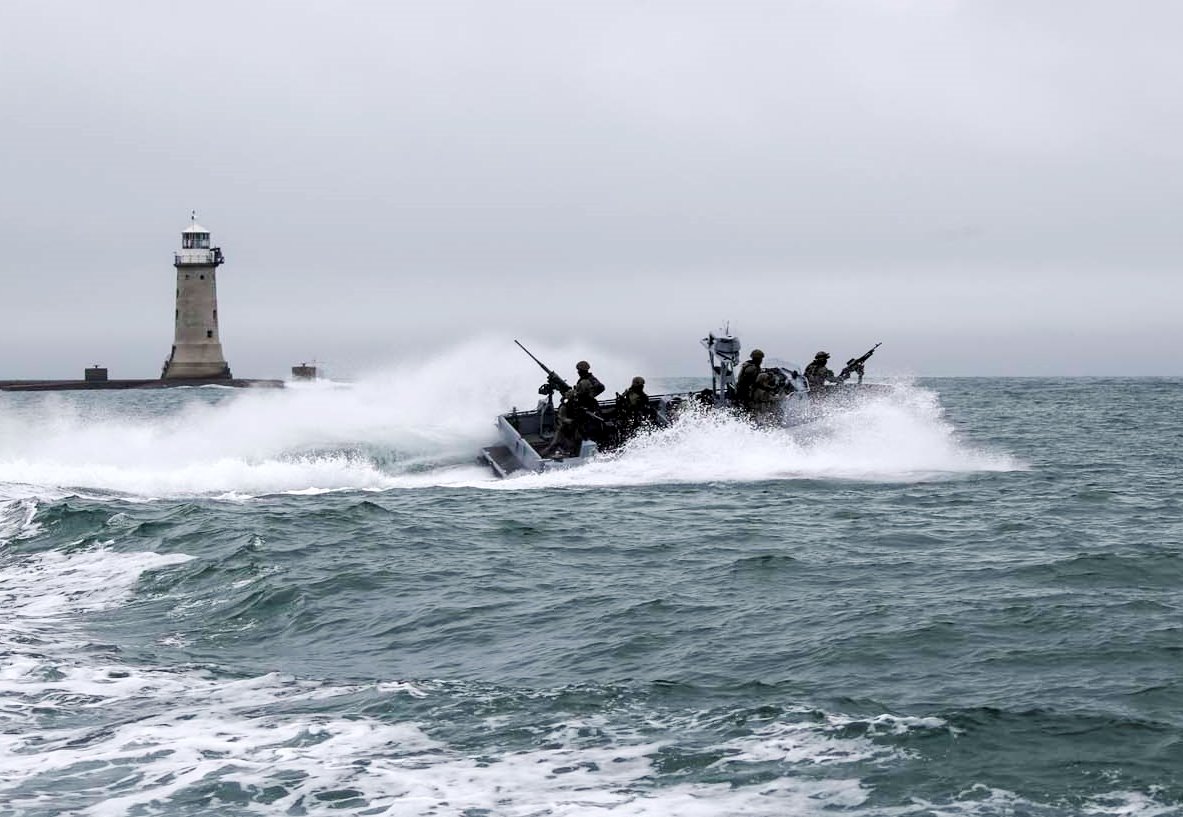
It also has new cooling systems, mast, trim for better protection from sea conditions and a sophisticated electronic suite for communications and navigation.
The CRC has three crew who rotate on long journeys but also space to launch drones, carry payloads and to store a smaller Inshore Raiding Craft to deploy on some landings if required.
Crucially, this is a life extension and upgrade to the ORC and, although it is more than just a stop-gap, in the long run Commando Forces are developing a boat that will replace the ORC, CRC and larger Landing Craft Vehicle Personnel.
“The current fleet of craft were ageing and had limited range and capacity,” explained Major Joe Brown, from the Commando Force Acquisition team.
“An opportunity was taken to revamp this fleet to deliver a considerable upgrade to the current craft through the development of in-service hulls.
“It is an example of developing for the future through maximising the potential within existing capabilities.”
Plymouth-based 47 Commando – the amphibious warfare experts of the Commando Force – will be at the controls of the CRC wherever it deploys around the globe.
The unit’s Commanding Officer, Colonel William Norcott, said: “The CRC is multipurpose and more supportive of the Commando Force model, working in small disaggregated teams that are structured to deliver a lethal punch. You can configure the craft to the way these teams are operating.
“This is exciting for us, because it’s a much more powerful craft, the coxswains will tell you, it’s much more enjoyable to operate, it’s more tactical and we don’t need the different variants like we currently have.
“We are really excited to have something that does what it says on the tin.”
In the meantime, CRC is already deployed on operations – namely with 47 Commando’s 539 Raiding Squadron and the Littoral Response Group (South) task force in the Mediterranean.
“We have achieved a significant amount of tactical development with the CRC whilst deployed on LRG(S),” said Major Dan Wake, Officer Commanding of 539 Raiding Squadron.
“We are now flying uncrewed aerial systems from the craft among other developments.
“The CRC in this role, with the new communications architecture fitted to enable rapid information flow, is ably demonstrating a broader utility than simply moving people from ship to shore.”
The LRG(S) task group – centred on 40 Commando and support ships RFA Lyme Bay and RFA Argus – is deployed to the Mediterranean ready to react to emerging crises or world events. The task group delivered more than 80 tonnes of humanitarian aid for Gaza on behalf of the UK in January.