Robosys Automation, ACUA Ocean and OREC secure Innovate UK funding
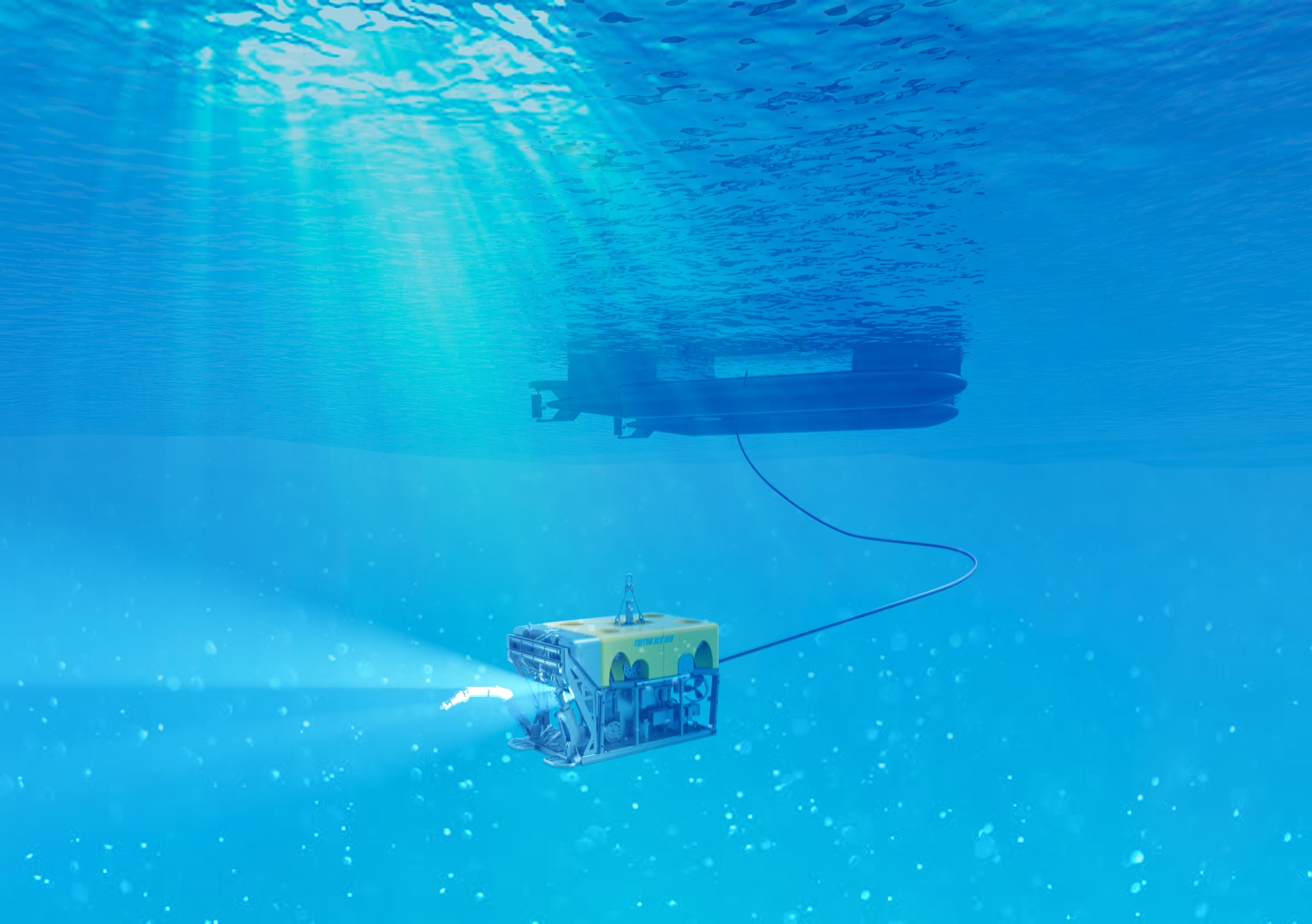
Image courtesy Robosys Automation
The Collaborative Automations for Subsea Intervention (CASI) project led by Robosys Automation aims to address a growing market need for improving operation and maintenance (O&M) and inspections of offshore assets with smarter, zero-emission, collaborative USV-ROV technologies.

Robosys Automation will be delivering two work packages, which include Multiple Objective Autonomous Adaptive Path Optimisation, specifically focusing on Weather routing and Fuel consumption optimisation for traditional fuels and hydrogen.
The second package is for the design of software architecture and simulation of Collaborative Autonomy between Uncrewed Surface Vessels (USVs) and Remotely Operated Vehicles (ROVs) and the development of software algorithms for station keeping and obstacle avoidance in uncharted offshore wind farms (OWF).
This feasibility study includes the software and algorithm design, and architecture required for the vessel to arrive on station safely and efficiently, maintain station and collaborate with, track and autonomously follow an ROV.
The global asset integrity management total addressable market is projected to grow from £17 billion in 2021 to £21.5 billion by 2026. This rapid market growth is expected to increase the demand for subsea intervention vessels required.
Maintenance, inspections and intervention cost ~ £18 million per year for a 1GW offshore wind-farm, with £900 million @50GW anticipated by 2030 in UK2. Current state-of-the-art subsea inspection requires Remote Operated Vehicles (ROVs) deployed from larger heavy diesel-burning crewed vessels which are limited by safety, crewing, vessel availability and operational sea states.
The project will help the maritime autonomy sector to further advance dual-use operations such as surveying, monitoring of critical offshore and underwater infrastructure, offshore energy and marine science, to increase productivity, profitability, safety and sustainability through these novel technologies.
The route optimisation will increase the endurance of the vessel overcoming the impact of hydrogen’s low volumetric density. Other aspects of the project include engineering feasibility of the ROV’s launch and recovery systems (LARS), combined with the related impact on a vessel’s stability in these scenarios.
The project’s success will be defined through software architecture design and algorithms primarily lead by Robosys’ development team to deliver Multiple Objective Autonomous Adaptive Path Optimisation.
Additionally, ACUA Ocean will spearhead the design of a new LARS and ROV that will both be technically advanced and commercially feasible, which will feature enhanced vessel stability for full open ocean operations and launch and recovery of payloads in over four metre significant wave heights.
OREC will develop the test and evaluation criteria for the LARS and conduct a Life Cycle Assessment.
Nigel Lee, CSO of Project Lead, Robosys Automation, said: “We are all delighted to have been awarded this significant funding, and look forward to commencing the rolling out of the project with our collaborators. This award reflects the importance of continuing to research and develop the maritime autonomy sector, to further support operational efficiency, enhance safety at sea, and actively drive decarbonisation.”
The MASS Collaborative Autonomy Project will reveal its findings in Spring 2025.