GlobalData sees environmental policy shift in the electrification of defence platforms
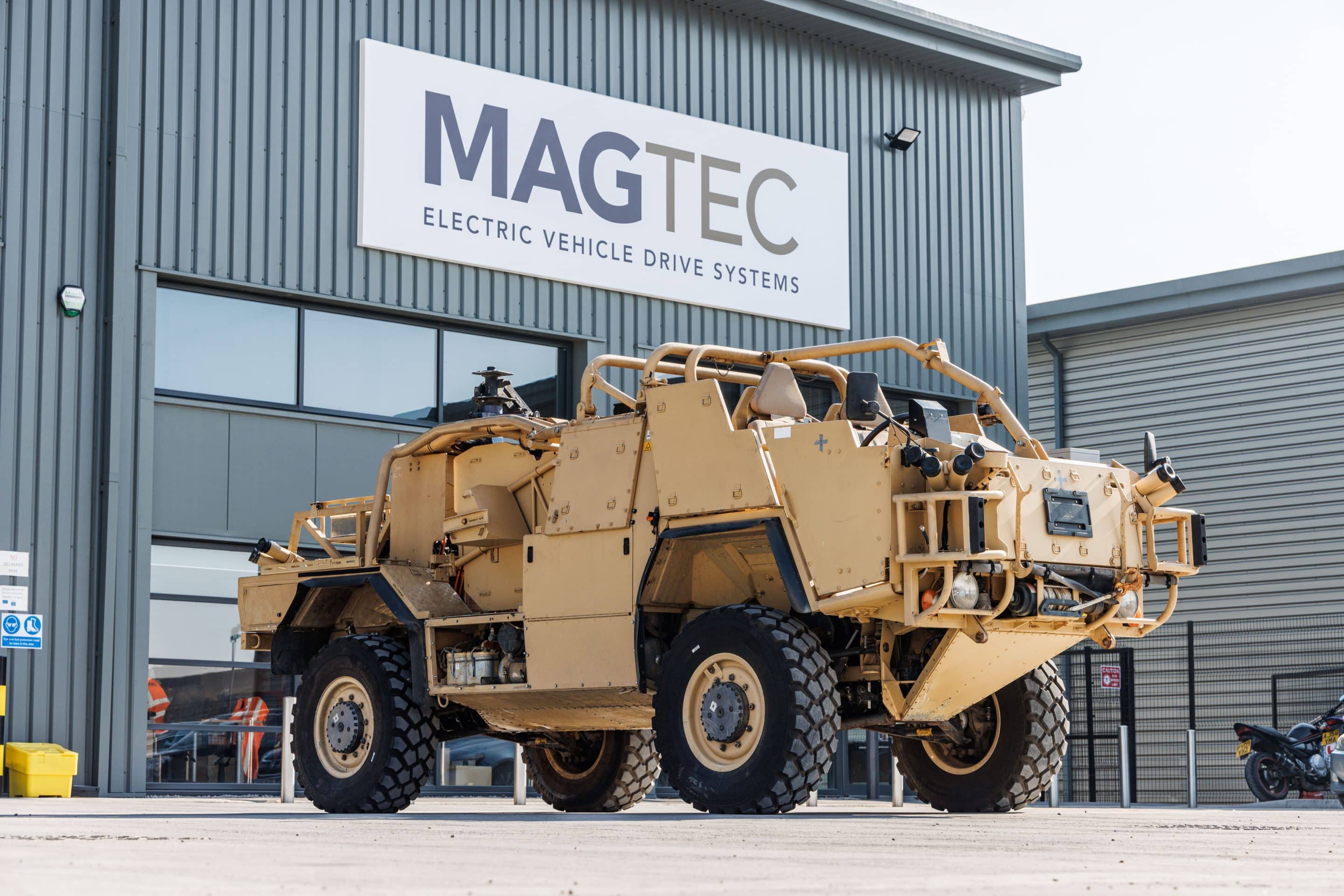
Image courtesy Magtec
The company noted that as world leaders gather in Egypt for the 27th United Nations Climate Change Conference (COP27) to discuss current and future environmental policies, the progressive electrification of the aerospace and defence industry illustrates the opportunities and challenges faced by armed forces worldwide in attempting to reduce energy emissions and waste.

Modernisation and concerns over energy security have been key drivers of electrification in the defence market, while the conflict in Ukraine has highlighted the vulnerability of logistics supply chains, reinforcing demand for more energy efficient and operationally sustainable defence equipment.
Tristan Sauer, Defence Analyst at GlobalData said: “These concerns have increased the pressure on defence companies to develop novel solutions with more eco-friendly credentials without sacrificing critical capabilities. The military armored vehicles market is a prime example, as various nations are investing in hybrid-electric propulsion systems to improve energy efficiency and reduce their logistical footprints.”
The US Army is developing hybrid-electric propulsion solutions for platforms including the new M1A2 Abrams X main battle tank and the JLTV light armoured vehicle.
Meanwhile, the British Army has invested in similar technologies for the land domain, with firms including Supacat, General Dynamics and MAGTEC collaborating to produce hybrid-electric variants of the Jackal HMT and Foxhound armoured vehicles as part of the Technology Demonstrator 6 (TD6) vehicle electrification initiative.
These decisions reflect a broader trend within the land vehicles market, as GlobalData forecasts that electric vehicles will account for 31.1% of total light vehicle production by 2035, a 27.9% increase over the figures for 2020.
The electrification of the defence industry is not confined to the land domain, as continued research into energy harvesting and storage technology is driving eco-friendly innovations in the air and naval domains as well.
Aircraft manufacturers like Airbus and Boeing continue to invest in hydrogen aircraft technology, while naval equipment designers Saildrone and Liquid Robotics have developed unmanned surface vehicles (USV) powered by renewable solar and wave energy.
Sauer concluded: “Global concerns over the impacts of climate change are driving innovation throughout the defence industry as militaries continue to pursue the electrification of vehicle fleets, with numerous major aerospace and defence primes investing proactively in emerging technologies.
"Though the integration of such capabilities into the military apparatus remains a challenge for the political institutions themselves, it remains clear that the global industry has seized the initiative as the defence market undergoes this shift towards a more sustainable future.”