DIO opens Military Working Dogs facility at RAF Marham
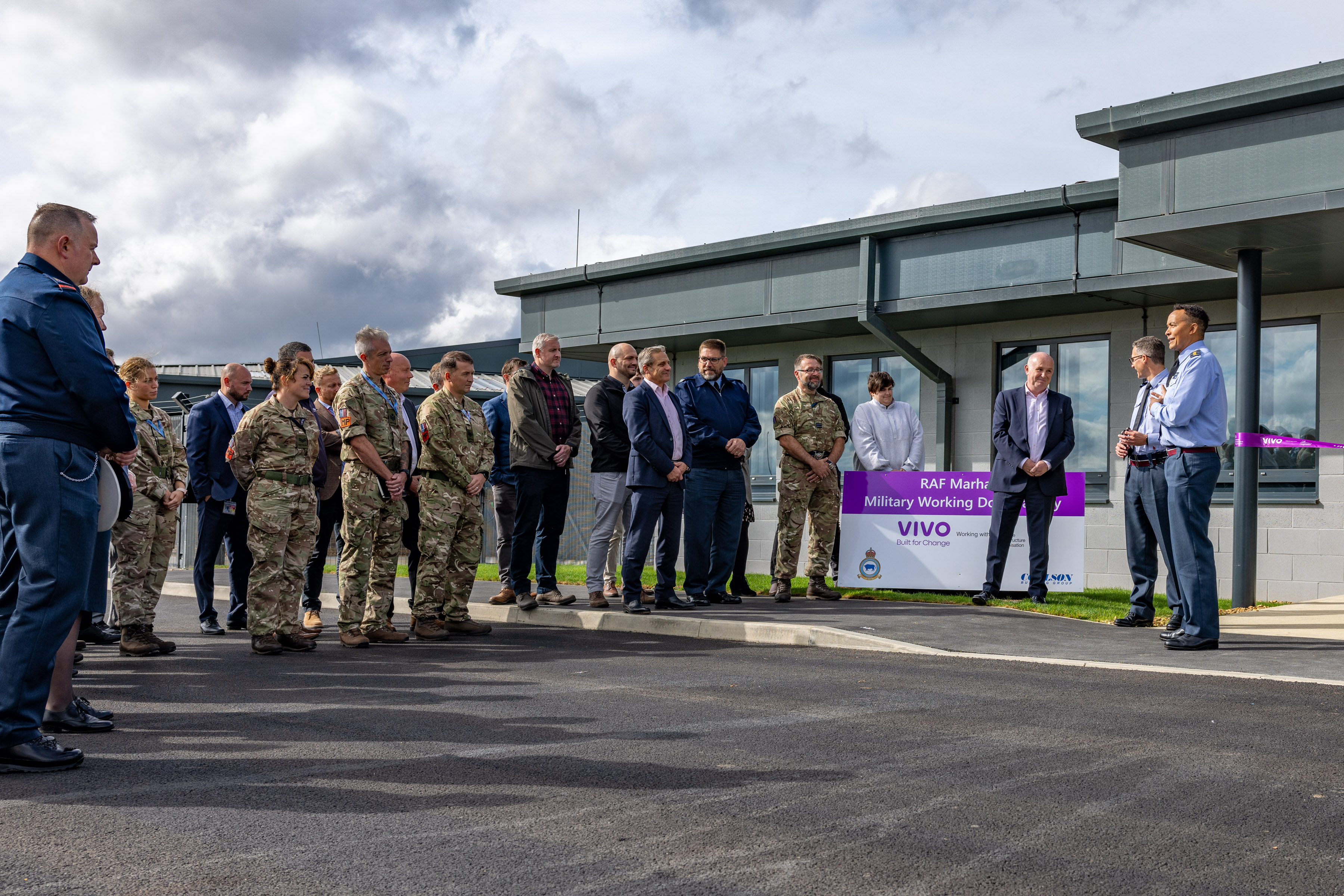
Above: Representatives from DIO, VIVO, Coulson Group, RAF Marham and other organisations at the opening of the new building.
Courtesy DIO / Crown Copyright MoD 2024
The £23 million facility includes kennels for 48 dogs, divided into three separate blocks, each with an outdoor exercising area for the dogs. One of the blocks is a veterinary area with isolation kennels for dogs who are receiving treatment. The building also features offices and relaxation area for the RAF Police. The project includes solar panels, plant rooms, a new access road, parking, cycle storage, two spaces for loading and unloading of vehicles and diversion and connection of services.

The new building replaces an existing facility with a larger, more comfortable and spacious building, improving the environment for both dogs and officers. For example, it includes underfloor heating for the comfort of the animals. The facility was designed in consultation with the military’s Veterinary Services Training and Advisory Team to ensure it met the requirements of the dogs and their handlers and complied with the Animal Welfare Act 2006.
The work was split into two phases, with the enabling work and groundwork done by Amey and the construction of the foundations and all buildings undertaken by VIVO Defence Services due to a transfer of wider DIO contracting arrangements. Both firms used the same sub-contractor, Cambridge-based Coulson Building Group, for continuity.
RAF Marham’s Military Working Dogs and their handlers are an important part of the security provisions for the station. They fulfil various roles including undertaking security patrols and as arms and explosive detection dogs.
Capt Nick Davenport, Garrison Engineer, said: “This new facility will provide more space and improved comfort for both Military Working Dogs and their RAF Police handlers. The dogs are a key component of the security of RAF Marham and their wellbeing has been our guiding principle throughout the design and build process. I’m very pleased with the end result and look forward to seeing the reaction of the dogs as they explore their new home.”
Group Captain Wigglesworth, Station Commander RAF Marham said: “The Military Working Dog capability at RAF Marham secures both the Station’s perimeter and the UK’s 5th Generation combat air capability, the F-35B Lightning Force. This new facility will give critical longevity to the Military Working Dog capability, providing a base for the dogs and their handlers that now matches their own exceptional standards, professionalism and commitment.”
Provost Marshal (RAF) and Commander of the Air Security Force, Group Captain Samantha Bunn said: “The new Military Working Dog facility at RAF Marham represents a landmark achievement for the RAF and Defence as a whole. It sets a new standard for animal welfare and handler support. Military Working Dogs provide a critical ‘protect’ function as part of our layered security methodology to deter and detect against the full spectrum of threats to Defence critical assets.
“This flagship facility demonstrates the RAF's commitment to being at the forefront of Military Working Dog care, ensuring our canine partners receive the highest quality housing and welfare provisions in order that they continue to conduct their duties.
“I would also like to extend my sincere gratitude to the hard work and dedication of those working behind the scenes to support the project throughout the whole process.”
RAF Marham is one of the RAF’s frontline operational stations, housing the RAF’s first F35 Lightning Sqn (617 Sqn) as well as 207 Sqn, the Operational Conversion Unit. Additionally, it accommodates a range of engineering support functions and other small units with over 3,600 personnel working on site, including service personnel, civil servants and contractors. The dogs and their handlers are an important element of the security provision to this vital Defence location.