ClearSpace set to accelerate UK’s space debris removal mission

Above: Artistic impression of the CLEAR servicer.
© ClearSpace
This new phase is pivotal for elevating the technology readiness levels of the preliminary designs submitted for the mission as it approaches the System Critical Design Review (CDR). The UK Space Agency is focused on thoroughly refining the mission's design and capabilities to ensure that the UK's Active Debris Removal (ADR) solutions are robust, reliable and prepared for future deployment.

With £2.35 million in funding secured, ClearSpace is resolutely committed to achieving ambitious objectives by March 2025.
The CLEAR mission is aimed at removing from low Earth orbit two derelict objects, clearing orbital space for new activities and reducing collision risk for neighbours. The CLEAR servicer will rendezvous with the first defunct object, capture it and transport it to an orbit at a lower altitude, where upon release, it will safely burn up in the atmosphere. Then the servicer will manoeuvre towards the second piece of debris to repeat the same set of operations.
"We are very proud of this achievement, which demonstrates our technical excellence and our commitment to making space safer and more sustainable," said Rory Holmes, Managing Director of ClearSpace UK. "We are grateful to the UK Space Agency for their trust and support and to our partners and suppliers for their collaboration and dedication. We look forward to continuing our work on this groundbreaking mission, which will pave the way for a new era of space activities."
Paul Bate, CEO of the UK Space Agency said: “The global space industry continues to set new records for the number of satellites launched into orbit, with more than 2,780 launched in 2023 alone. While these satellites deliver valuable services back to people on Earth, we also need to make sure we protect the space environment and develop new ways to remove space debris. That’s why this next phase of work towards a national ADR mission is so important. We want to build on the successful completion of the preliminary mission designs and support ClearSpace and their partners as they continue to develop and derisk this innovative technology.”
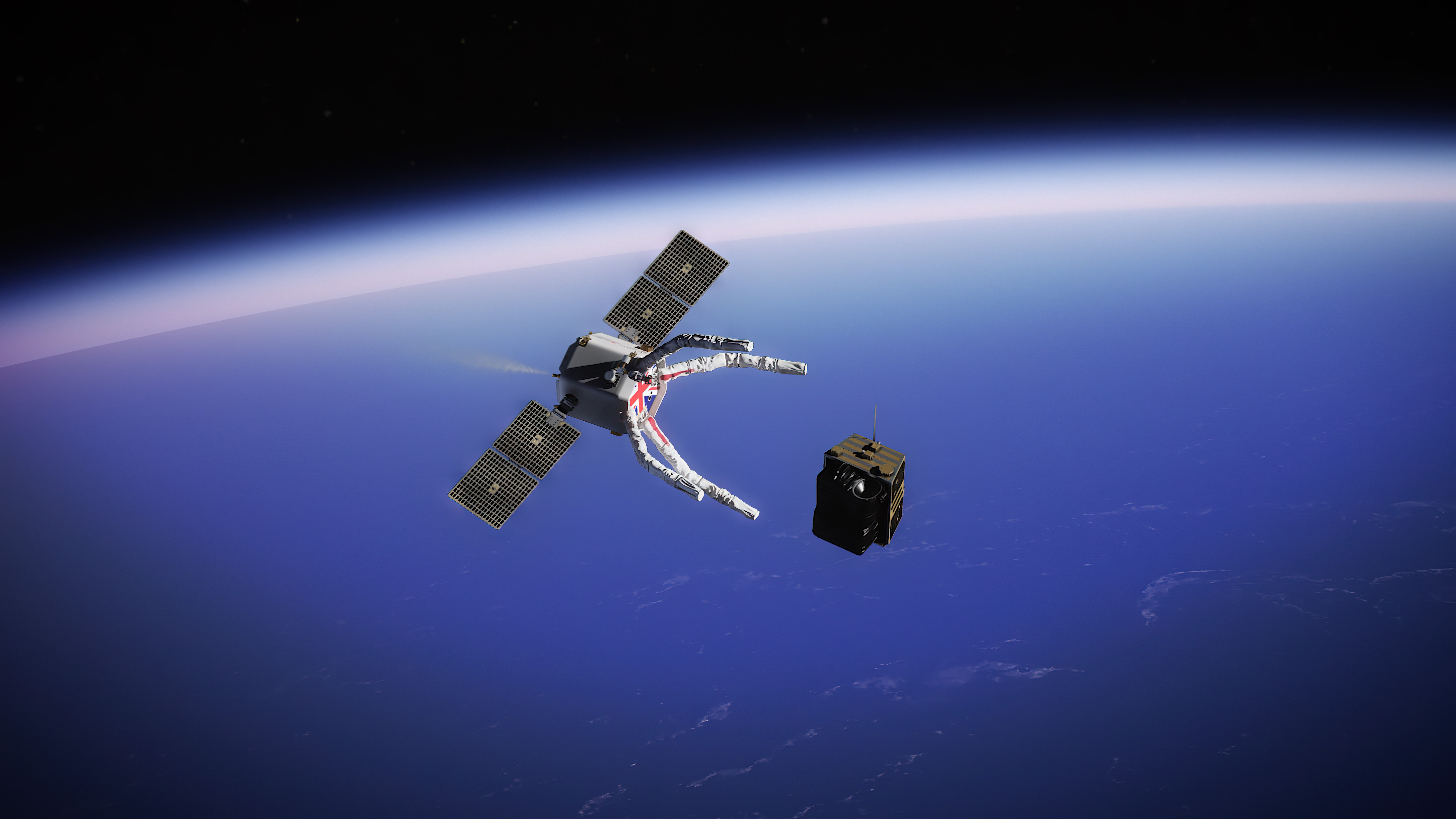
Above: Artistic impression of the CLEAR servicer approaching client object.
© ClearSpace
The mission will demonstrate the feasibility of active debris removal, providing concrete solutions to the technical and operational challenges involved. By its novelty, the mission will also contribute to the development of standards and regulations for in-orbit services and will act as a stepping stone towards the creation of a new market for assisted disposal services.